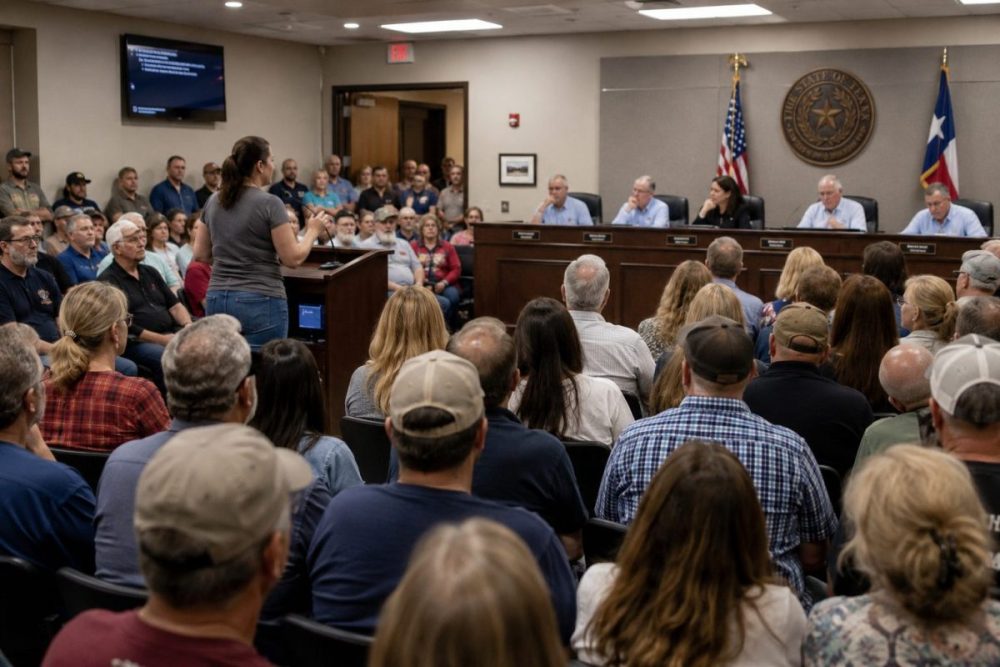
Old Saltillo United Methodist Church to Hold a Special Service May 17th

May 14, 2026 – Old Saltillo United Methodist Church is honored that Mark Miller, concertmaster and principal violinist of the East Texas Symphony Orchestra, will be helping to lead the worship service this Sunday May 17th, 2026. Mark performs with the Fort Worth Symphony and other North Texas ensembles. He is a founder and president of Mount Vernon Music, a membership-based nonprofit bringing outstanding performances of chamber music to under-served audiences in East Texas. A potluck lunch will follow the church service conducted by Rev. David Larkin.
Buckle up or pay the Price

May 14, 2026 -Click It or Ticket increased enforcement May 18–31
AUSTIN – We are Texans. We wear our Lone Star belt buckles with pride, but it’s the buckle in your car or truck that matters the most. It’s the one that can save your life.
That’s why the Texas Department of Transportation (TxDOT) is working with law enforcement and encouraging people to drive like a Texan — kind, courteous and safe — and always buckle up. Remember, Click It or Ticket: every rider, every time.
Lives changed in seconds
Camron Murrell of College Station was just 19 years old when he was killed in a nighttime crash on a back road off Interstate 10 in Liberty County, Texas, in 2020. He was driving with a close friend when he veered off the road and hit a tree.
Camron wasn’t wearing a seat belt, and neither was his passenger. They died instantly.
“Every time he was in my car and wouldn’t put his seat belt on, I would say ‘buckle up!’” said Camron’s mother, Priscilla Wolf. “And it may seem I was on him about it all the time, but he still didn’t listen.”
Seat belts save lives, but only when worn
In 2025, 965 people who died in traffic crashes on Texas roads were not buckled up. While that was a 10% decline from the previous year, which had 1,072 unbuckled fatalities, more lives could have been saved.
“A seat belt can be the difference between walking away from a crash and never making it home, but only if you’re wearing it,” TxDOT Executive Director Marc Williams said. “Whether you’re going just a few blocks or many miles, buckle your seat belt every time, day and night.”
Increased enforcement across Texas
Studies show 1 in 10 Texans do not take the simple step of buckling up — that’s more than 3 million people. Law enforcement will be increasing patrols for two weeks starting May 18, watching out for people not wearing their seat belt.
Texas law requires all drivers and passengers to buckle up or face fines and court costs up to $200. Children younger than 8-years-old must be in a child car seat or booster seat unless they’re taller than 4 feet 9 inches. If they aren’t properly secured, the driver faces fines up to $250 plus court costs.
A campaign proven to save lives
Click It or Ticket is one of the most effective traffic safety initiatives in history. The National Highway Traffic Safety Administration estimates the Texas campaign has saved more than 8,600 lives, prevented 157,000 serious injuries and resulted in $35 billion in economic savings since its launch in 2002.
The Click It or Ticket campaign is an important part of TxDOT’s Drive like a Texan: Kind. Courteous. Safe. initiative. Drive like a Texan is about embracing the pride, camaraderie and responsibility of being a Texan on the road. By making thoughtful choices, we can all help keep each other safe. Learn more at DriveLikeATexan.com.

More Texas Lawmakers Urge Pause on Massive Transmission Project Amid Growing Questions
May 14, 2026 – A growing number of Texas lawmakers are calling for a pause on one of the largest proposed energy infrastructure projects in state history, raising concerns about cost, transparency, and whether the effort is even addressing the state’s most urgent energy needs.
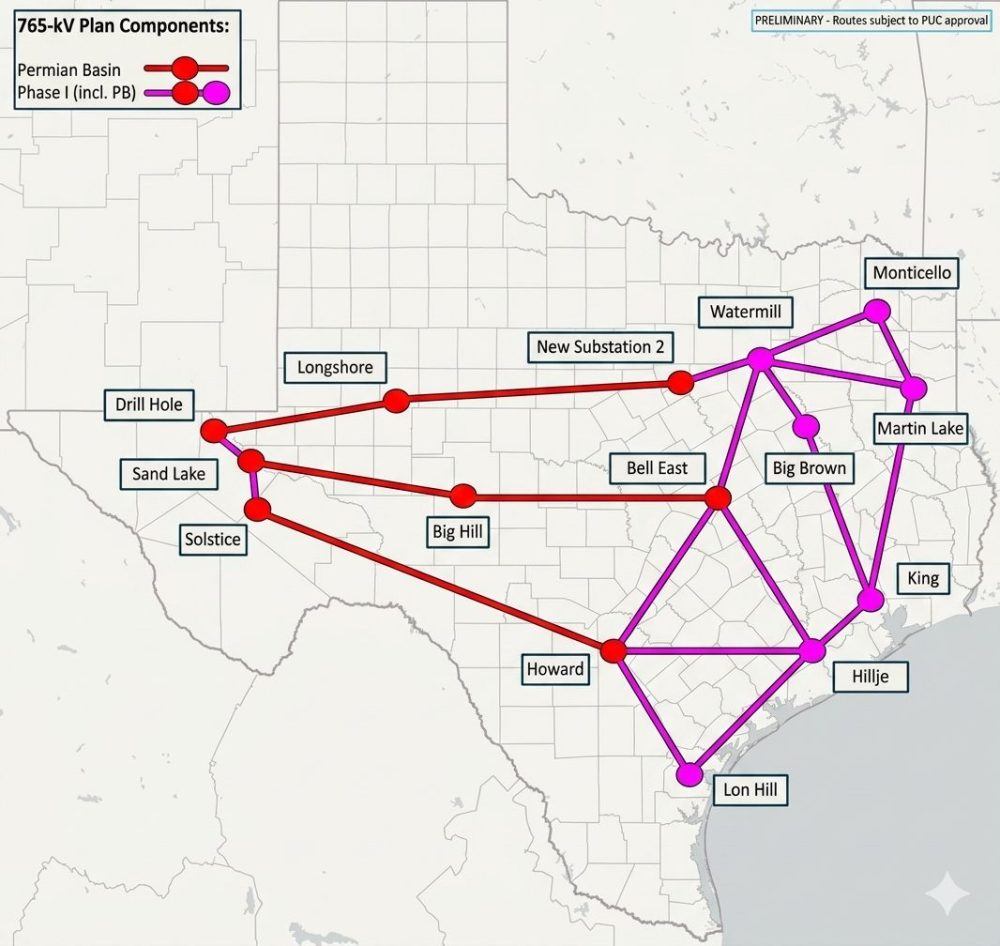
In a newly signed letter, 25 state legislators are requesting a formal meeting with the Public Utility Commission of Texas to discuss the proposed construction of three extra-high-voltage 765-kilovolt transmission lines. The lines would stretch from East Texas to the Permian Basin, a region known for its vast oil and gas production and rapidly increasing electricity demand.
Originally introduced as the “Permian Basin Reliability Plan,” the project has expanded significantly since its legislative approval. Lawmakers now estimate the total cost could reach between $90 billion and $100 billion, making it one of the most expensive grid expansion efforts ever proposed in the state. Critics argue that such a price tag would ultimately fall on consumers, potentially increasing the average homeowner’s electricity bill by about $200 annually.
At the heart of the debate is a fundamental question: what is this infrastructure actually for?
Supporters say the transmission lines are needed to move large amounts of electricity across Texas and improve grid reliability, particularly as demand surges in energy-producing regions. However, skeptics argue that building more transmission alone does not solve reliability issues if there isn’t enough dependable power generation feeding into the grid.
Some lawmakers and energy analysts contend that investing in new power plants—such as natural gas, coal, or nuclear facilities—would provide more consistent and dispatchable energy, especially during extreme weather events. They suggest that without parallel investments in generation, the transmission lines may primarily serve large industrial loads rather than everyday consumers.
That has led to increasing speculation that part of the demand could be tied to energy-intensive operations like data centers or industrial-scale computing facilities, which require enormous and constant electricity supply. While no official plan has confirmed this as the primary driver, the scale and routing of the project have fueled those questions.
The controversy has also taken on a geopolitical dimension. Records from the Public Utility Commission show that one proposed route would cross land owned by Sun Guangxin, a Chinese billionaire with reported ties to the Chinese Communist Party. His company has reportedly requested that the transmission line be rerouted to avoid property near a residential structure on the land.
Sun has acquired roughly 7 percent of the land in Val Verde County since 2015, prompting concern among state officials. In response to similar issues, Texas lawmakers passed legislation in 2025 restricting land purchases by individuals and entities linked to countries deemed hostile to U.S. interests.
For critics, the routing issue underscores broader concerns about oversight and planning. They argue that a project of this magnitude should involve greater public input and clearer justification, especially given its potential long-term impact on land use, energy policy, and consumer costs.
As pressure mounts, the requested meeting with regulators could become a pivotal moment in determining whether the project proceeds as planned—or faces significant revision or delay.
Application Submitted For Data Center Power Station
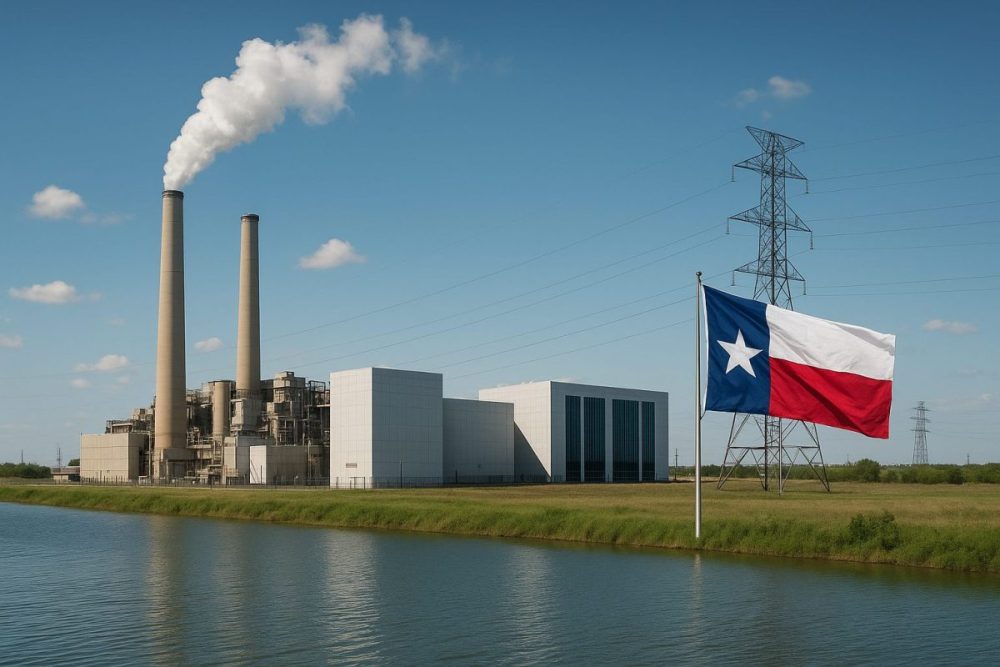
May 14, 2026 – Chevron is seeking a massive Texas tax break for a natural gas power plant tied to the exploding energy demands of artificial intelligence data centers, according to a new report from Mother Jones. The project, led by Chevron subsidiary Energy Forge One, would supply electricity directly to a proposed data center campus in West Texas that could ultimately serve Microsoft.
The company is applying under Texas’ Jobs, Energy, Technology, and Innovation (JETI) program, which allows large industrial projects to sharply reduce their local school property tax obligations. State documents indicate Chevron could save more than $227 million over a decade if the deal is approved.
Behind-the-meter (BTM) gas plants are on-site power generation facilities built directly at the site of high-demand users, such as data centers, to provide electricity directly without relying on the public utility grid. These systems, frequently used in AI data center development to bypass multi-year grid connection delays, use natural gas turbines to offer reliable, on-demand power in months rather than years.
The proposed facility would be located near Pecos in the Permian Basin and initially generate about 2,500 megawatts of electricity — enough to power hundreds of thousands of homes. But unlike traditional power plants, the electricity would bypass the public grid entirely and flow straight to an adjacent AI-focused data center through what is known as a “behind-the-meter” arrangement.
Critics argue the arrangement highlights a growing contradiction in the AI boom: tech companies are pledging sustainability while increasingly relying on fossil-fuel infrastructure to secure reliable electricity. Environmental groups warn the plant could emit more than 11 million tons of greenhouse gases annually, making it one of the larger industrial emissions sources in the region.
Chevron says no final agreement with Microsoft has been completed and maintains the tax incentives apply only to the power facility, not the data center itself. Microsoft has separately promised to pay a “full and fair share” of local taxes in communities where it builds data centers.
The debate arrives as Texas lawmakers from both parties begin scrutinizing the enormous public subsidies flowing to AI infrastructure projects, especially as electricity demand and consumer power prices continue rising statewide.
Connor Cemetery to hold Memorial Day Homecoming May 24th

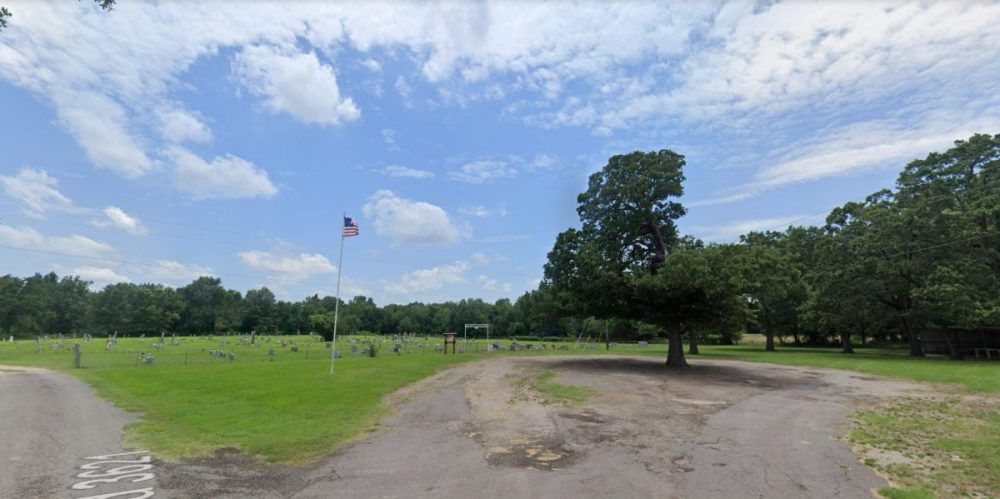
May 13, 2026 – Memorial Day Homecoming will be held on Sunday, May 24, 2026, at Connor Cemetery, 3621 County Road, Dike, Texas, off Farm Road 69 North. Meeting to begin at Noon. Come early to visit with friends and family. Hopkins County Stew will be served after the Annual Meeting. Bring your own bowls and a covered dish to share. Everyone is welcome.
Bibleway Lighthouse Church will Present a Special Message May 17th

May 13, 2026 – Donna Blades Albert will be preaching a special Service at Bibleway Lighthouse Church Sunday, May 17th, 2026, at 11:00am. Sunday School begins at 10:00am with Praise and Worship at 11:00am. The Church is located on CR 4591. Go North on Hwy. 19, turn Right on Mahoney Road, and go straight to FM 3236, and turn Left. Go until you see CR 4591 and turn Left. The Church is located on the Left. Watch for Church signs.

Possible Home Invasion Shooting Results in Death

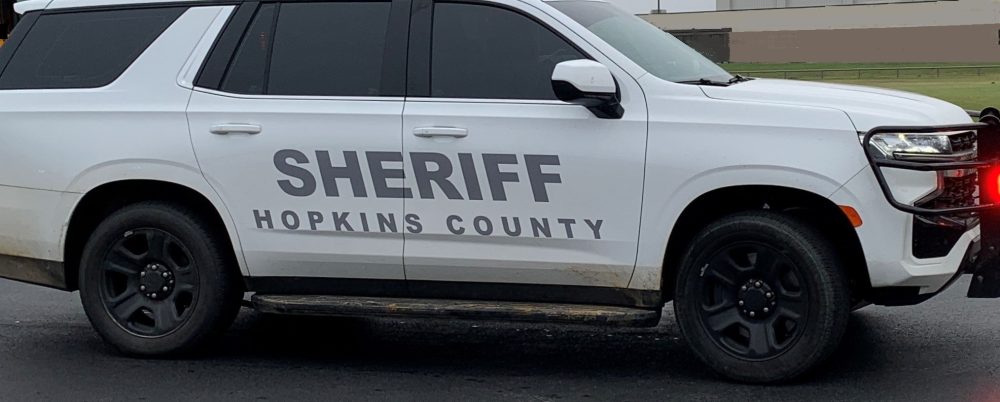
May 13, 2026 – Hopkins County Sheriff Office deputies responded to a call on County Road 4779 of Suspicious Activity. Before deputies could reach the residence another call came in at the same address of a Shooting. Upon arrival deputies reviewed Ring Camera footage showing an individual yelling and striking the front door of the home. The video also showed the individual, identified as Buck Clary, breaking the glass on the door and reaching inside the door. The homeowner, who has not yet been identified, discharged a firearm through the door striking Clary. Hopkins County EMS transported Clary to the local emergency room where he died from the gunshot wound.
The investigation into the incident is ongoing.
Beef Prices Defy Efforts to Lower Them

May 13, 2026 – The administration of Donald Trump is refining a set of executive actions aimed at easing high beef prices in the United States, according to a White House official on Tuesday. The measures, initially expected earlier in the week, have been delayed as policymakers “fine-tune” details intended to address ongoing supply shortages.
The U.S. is the world’s largest beef producer and consumer, yet it is also a top importer and exporter. As of 2026, the U.S. is increasing beef imports to manage domestic consumer prices, with 2025 imports reaching $13.75 billion, while 2026 exports have declined to $9.3 billion, driven by high demand for imported lean, grass-fed trim for ground beef.
At the center of the effort is a plan to expand beef imports and provide additional federal support to American ranchers working to rebuild the nation’s cattle herd. The U.S. herd has fallen to its lowest level since 1951, driven by years of drought, rising feed costs, and market incentives that encouraged ranchers to send cattle to slaughter rather than retain them for breeding.
Despite easing prices for some grocery staples like eggs and milk, beef remains stubbornly expensive. Retail beef prices have risen more than 16% since Trump returned to office in January 2025, making it a key symbol of persistent food inflation as the summer grilling season approaches.
Market signals reflect the strain. On the Chicago Mercantile Exchange, June live cattle futures edged higher Tuesday, while feeder cattle contracts slipped slightly, underscoring volatility in supply expectations.
Previous steps, including tariff reductions on imports from Brazil and Argentina, have done little to curb rising prices. Demand continues to outpace supply, fueled by population growth and steady consumer appetite for beef.
The U.S. Department of Agriculture projects the U.S. will import a record 5.8 billion pounds of beef in 2026, highlighting the scale of the shortfall. Officials say the administration’s forthcoming actions are intended to provide both immediate relief and longer-term stability in the domestic beef market.
Greenpond Baptist Church to Hold Memorial Service May 17th

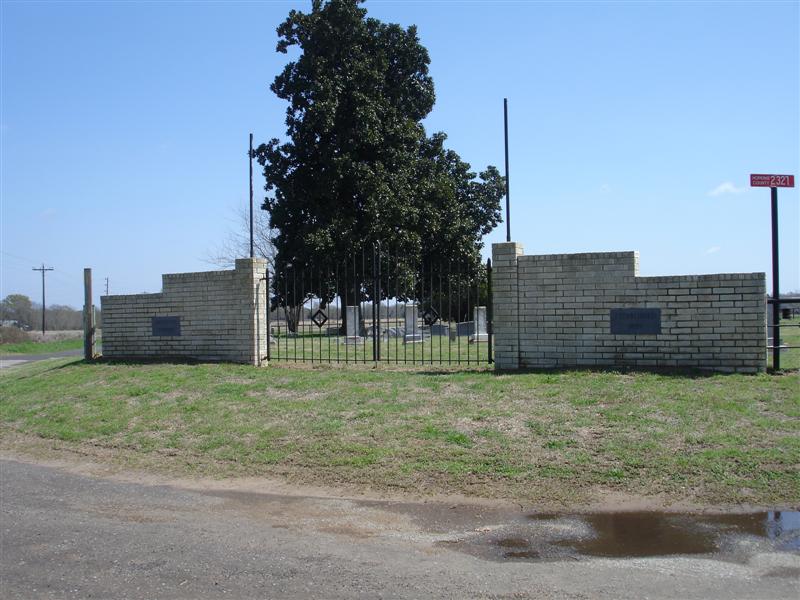
May 12, 2026 – Memorial Service at Greenpond Baptist Church will be Sunday, May 17th, 2026, at 10:30am. Brother Terry Bolton will be the messenger. A covered dish luncheon will follow. Donations to Greenpond Cemetery Society we be appreciated. Send donations to …
Greenpond Cemetery
C/O Frankie Coker
786 FM RD 2948
Como, Texas, 75431
Henderson County Commissioners Court Listens To Citizen Concerns On Data Centers
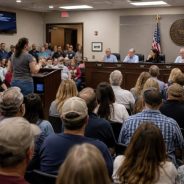
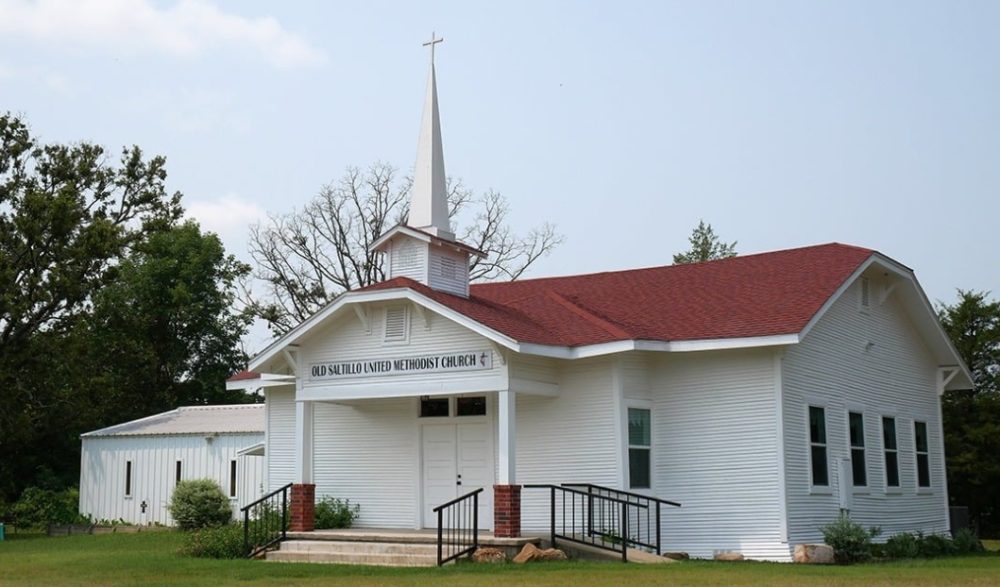
May 12, 2026 – ATHENS, Texas — After weeks of growing public concern, officials in Henderson County took a formal step Tuesday to address the rapid expansion of data center development across rural Texas. Following an extended public comment period that drew more than 200 attendees, county commissioners approved a resolution calling for stronger safeguards and greater state involvement in how and where large-scale data centers are built.
Dozens of residents spoke during the meeting, many voicing concerns about how these projects could reshape the character and resources of communities like Athens. Their concerns reflect a broader trend across Northeast Texas, where rural counties are increasingly being targeted by developers seeking land for energy-intensive data centers tied to artificial intelligence and cloud computing growth.
County Attorney Kenneth Strawn read the resolution into the record, emphasizing a balance between economic opportunity and resource protection.
“The Henderson County Commissioners Court supports responsible economic development, including appropriately designed and sited data center facilities,” Strawn said. However, the resolution formally opposes the use of open-loop evaporative cooling systems and other technologies that require large volumes of potable water in regions already facing water constraints. It also calls for enforceable safeguards to protect infrastructure, natural resources, and local residents.
Pct. 1 Commissioner Wendy Spivey underscored that the vote was not tied to any specific proposal.
“This is not a vote approving or denying any specific project today,” Spivey said. “It’s just a statement that economic development and protecting our community should go hand in hand.”
The debate in Henderson County mirrors a growing statewide issue. As demand for data processing power surges, developers have increasingly turned to rural parts of Texas, where land is more affordable and zoning restrictions are often limited. According to industry estimates, large data centers can consume millions of gallons of water per day for cooling and require massive, continuous electricity loads—placing strain on local utilities and the state’s already stressed power grid.
In Northeast Texas, residents and local leaders say those pressures are particularly concerning. Many rural counties lack the infrastructure to support such high-demand facilities, and officials worry about long-term impacts on groundwater, agriculture, and residential energy costs. Critics also argue that rural communities are sometimes approached with limited transparency, leaving residents feeling sidelined in decisions that could permanently alter their environment.
At the same time, proponents of data center development point to potential economic benefits, including job creation, increased tax revenue, and infrastructure investment. But in many cases, residents argue the trade-offs are not clearly defined, especially when compared to the scale of resource consumption.
The resolution passed by Henderson County commissioners calls on state lawmakers to take a more active role in regulating the industry, particularly in setting standards for water use, energy demand, and environmental protections. It also reflects a growing push among rural communities to gain more local authority over industrial-scale development.
As Texas continues to position itself as a hub for technology infrastructure, the outcome of debates like the one in Athens may help shape how—and where—that growth unfolds.